When the Dragon Flew Again
"64 days"
When the Dragon Flew Again
After nine years of riding foreign rockets to an American space station, two test pilots returned human spaceflight to the Florida coast—and proved that a commercial spacecraft could carry NASA crews from launch to splashdown.
The Long Wait
When Atlantis closed the space shuttle era in July 2011, American astronauts did not stop flying. They simply stopped launching from home. For nearly a decade, crews bound for the International Space Station rode Soyuz rockets from Baikonur, Kazakhstan—a capable arrangement, but one that left the United States without independent crew launch capability. NASA answered with its Commercial Crew Program, contracting private industry to build and operate spacecraft while the agency retained authority over safety and mission requirements. By spring 2020, SpaceX stood ready for the culminating test: Demo-2, a crewed flight that would validate the entire transportation system from pad to ocean recovery.
Two Pilots, One Capsule
NASA assigned Robert Behnken and Douglas Hurley to the mission—veterans chosen for the kind of disciplined judgment test programs demand. Behnken, a U.S. Air Force flight test engineer with two shuttle flights and six spacewalks behind him, served as joint operations commander, overseeing rendezvous, docking, and undocking. Hurley, a Marine Corps fighter and test pilot who had flown as pilot on Atlantis’s final mission, commanded the spacecraft through launch, entry, and recovery. They would ride inside Crew Dragon Endeavour, atop a Falcon 9, from Launch Complex 39A—the same historic pad that once sent Apollo and shuttle crews toward orbit.
Launch Day
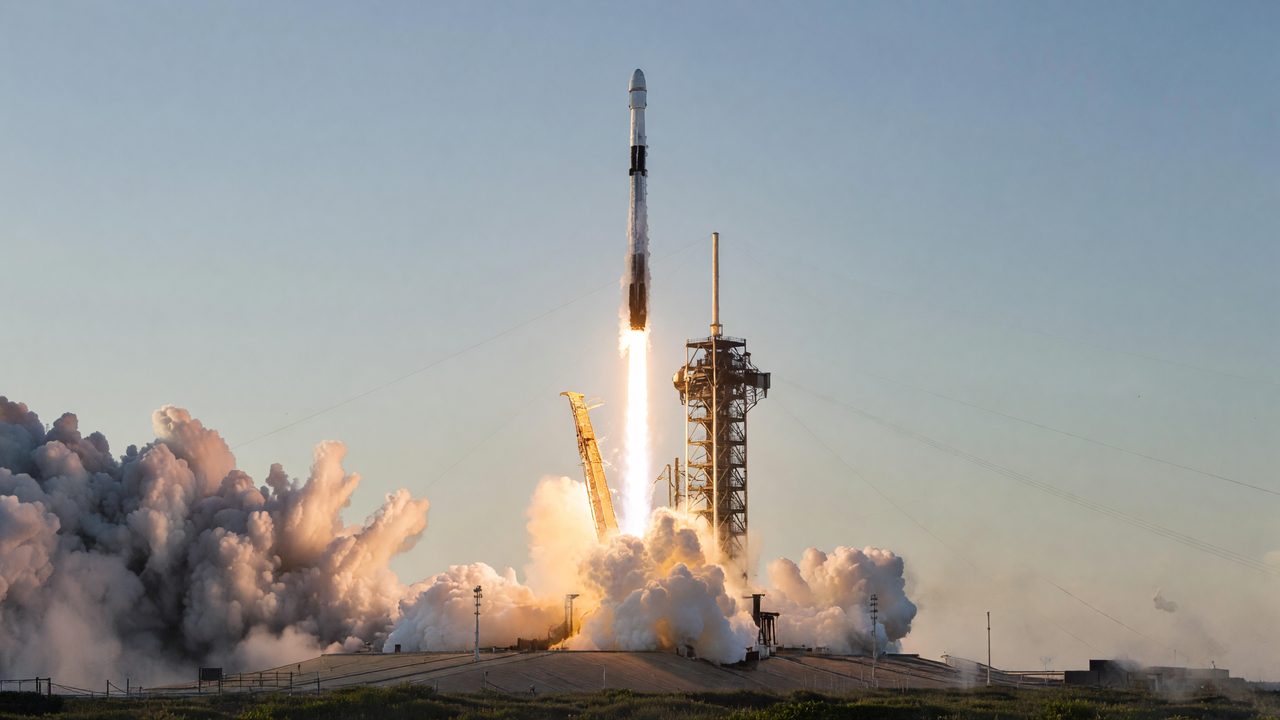
Weather scrubbed an earlier attempt on 27 May, but on Saturday, 30 May 2020, at 3:22 p.m. EDT, the Florida coast thundered once more. A Falcon 9 climbed from 39A, accelerating Behnken and Hurley to roughly 17,000 mph on an intercept course with the station. NASA’s news release that afternoon framed the moment plainly: American astronauts were launching from America again, aboard an American rocket, in the first crewed flight of a commercially built and operated spacecraft in history. In orbit, the crew and SpaceX mission control exercised the environmental systems, displays, and thrusters. Behnken and Hurley also tested manual flight controls—confirming that human hands could assume command if automation faltered—before Crew Dragon autonomously docked with the International Space Station.
Certification by Flight
Demo-2 was not a sightseeing trip. As NASA’s mission overview explained, it was the final major step before certifying Crew Dragon for operational station rotations. Behnken and Hurley joined the Expedition 63 crew, conducted research, and continued evaluating the vehicle while aboard the station. Their stay stretched to 64 days—long enough to stress the system in the real environment of human spaceflight. On 2 August 2020, Endeavour undocked, re-entered the atmosphere, and splashed down under parachutes in the Gulf of Mexico. SpaceX’s recovery ship Go Navigator retrieved the capsule and crew at sea off the Alabama Gulf coast—a scene echoing Mercury-era recoveries, executed with twenty-first-century precision. The Commercial Crew Program status briefing to NASA’s advisory council in May 2020 had already outlined what success would mean: a certified pathway for NASA to buy crew transportation as a service, sustaining station research while freeing agency resources for deeper exploration.
A New Partnership Model
The flight demonstrated that private enterprise and public purpose could work as partners rather than rivals. SpaceX owned the hardware and much of the operations; NASA set the standards and held approval authority. The result was a human-rated system validated end to end—launch pad, rocket, capsule, mission control, and recovery—without NASA building every bolt itself. For pilots accustomed to FAA certification logic, the architecture felt familiar: define requirements, test rigorously, certify what works, then operate.
Why it matters to you
The legacy of Demo-2 reaches well beyond Cape Canaveral. After nine years during which American astronauts had ridden Russian rockets to reach their own space station, the mission restored domestic crew launch and established a commercial model that now shapes how aviation-adjacent systems are developed and certified. Modern pilot training emphasizes the same disciplines Behnken and Hurley embodied: systems knowledge deep enough to supervise automation, manual proficiency for the moment software cannot decide, and crew resource management across distributed teams—cockpit, mission control, and recovery assets working a single brief. Whether you fly a Cessna or monitor a glass cockpit on an airliner, the lesson holds. Technology may execute the routine; the rated pilot must understand the system, verify its behavior, and remain ready to take control. Demo-2 proved that principle at 17,000 mph—and reminded every aviator that the hardest part of flight is not leaving the ground, but knowing exactly when to trust the machine and when to fly it yourself.