When Fog and Phraseology Failed: Tenerife, 1977
"March 27, 1977"
When Fog and Phraseology Failed: Tenerife, 1977
On a crowded apron in the Canary Islands, two Boeing 747s and a chain of small misunderstandings produced the deadliest accident in aviation history—and lessons every pilot still trains on today.
A Diversion That Filled a Small Field
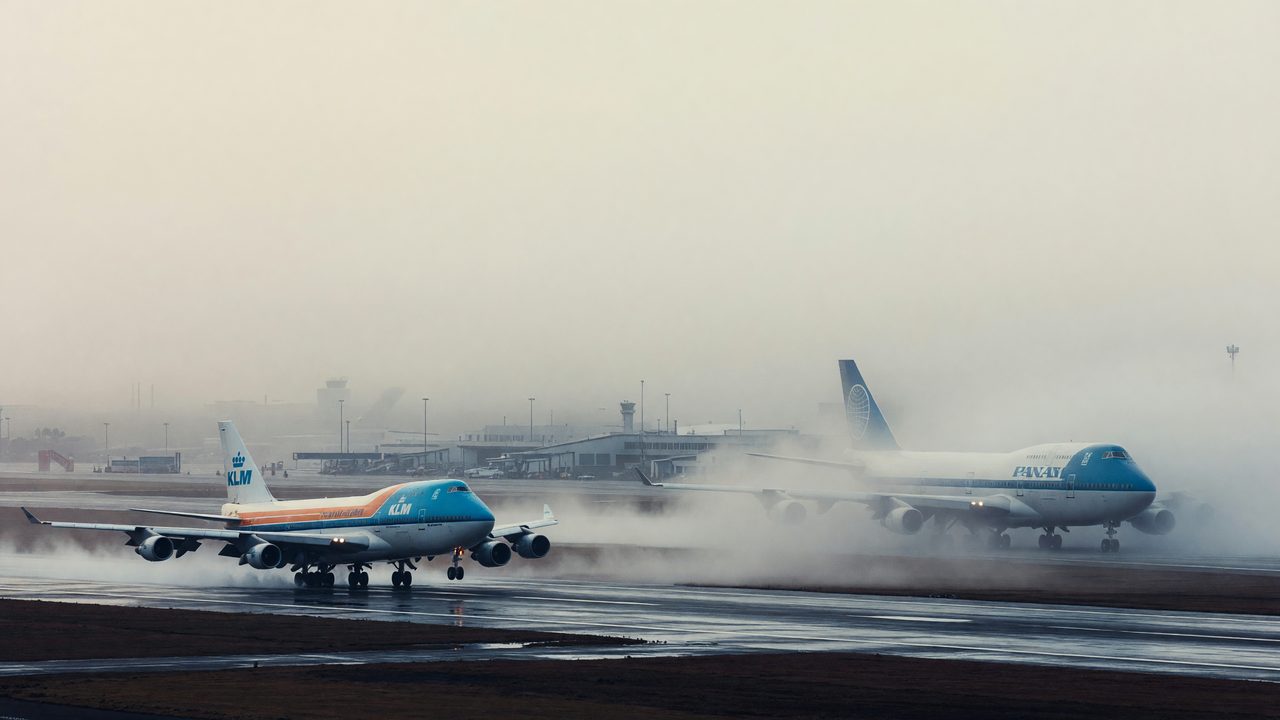
The afternoon of March 27, 1977, began with routine holiday traffic across the Canary Islands. Then a bomb exploded at Gran Canaria Airport, and a further bomb threat closed it on Las Palmas, and dozens of aircraft diverted to Los Rodeos on Tenerife—a compact airfield not designed for that volume of traffic. Among the arrivals were two Boeing 747s: KLM Flight 4805, operating PH-BUF, and Pan American Flight 1736, N736PA.
When Gran Canaria reopened, both crews prepared to continue their journeys. Los Rodeos had no parallel taxiway along the active runway; aircraft had to backtrack on the runway itself before taking off. Controllers were managing a congested ramp, repositioning traffic, and working in a mix of Spanish and English. The stage was set for complexity before weather entered the picture.
The Runway Became a Blind Alley
As departure time approached, a dense fog rolled across the field. Visibility fell to roughly 300 metres—enough to hide a 747 from another aircraft on the same pavement. The Pan Am crew, still on the runway and searching for a taxiway exit in the murk, could not see the KLM jet lining up behind them. The KLM crew, in turn, could not see the Pan Am aircraft ahead.
According to the Spanish Accident Board’s 1978 report and the FAA’s subsequent accident summary, the critical failure was not a single broken instrument or mechanical defect. It was communication: a sequence of radio transmissions that each party interpreted differently. The KLM captain—an esteemed instructor and one of the airline’s most senior pilots—believed he had received takeoff clearance. The controller’s language, the crew’s expectations, and the pressure of a delayed departure converged on a fatal assumption.
Thirteen Seconds
The KLM flight engineer asked explicitly whether the Pan Am aircraft had cleared the runway. The captain replied with a forceful “Yes.” Thirteen seconds later, the KLM 747 began its takeoff roll into the fog.
PH-BUF struck N736PA at high speed. The impact and fire destroyed both aircraft. All 248 people aboard the KLM flight perished. Of the 396 aboard the Pan American jet, 335 were killed; 61 survived, many with severe injuries. With 583 fatalities, the disaster remains the deadliest accident in aviation history.
The NTSB’s 1986 Special Investigation Report and Spain's 1978 errata to its own report examined the event in detail for U.S. operators. Investigators identified overlapping factors: non-standard phraseology, ambiguous controller instructions, incomplete readbacks, and a steep authority gradient in the KLM cockpit that suppressed the flight engineer’s doubt at the decisive moment. The Pan Am crew’s difficulty locating Taxiway C-3 in low visibility placed them on the runway longer than either flight crew fully understood.
What Changed After the Smoke Cleared
Tenerife did not produce a single technical fix. It reshaped how the industry treats human factors. Standard phraseology for takeoff clearance—“line up and wait” versus “cleared for takeoff”—was sharpened and internationalized. Crew resource management moved from seminar rooms into mandatory training: first officers and flight engineers were given explicit permission to challenge captains when safety was in question. Runway incursion prevention became a standing topic in every recurrent check.
The accident also reinforced a principle investigators still cite: the deadliest errors are often ordinary ones, stacked in sequence. Diversion. Congestion. Weather. Ambiguous radio calls. Assumption where verification was required. No one aboard either aircraft set out to cause a catastrophe that Sunday afternoon.
Why it matters to you
The chain of events at Tenerife—diversion stress, deteriorating weather, non-standard communications, and a senior captain who answered “yes” when the runway was not clear—is studied precisely because similar patterns still appear in modern accident reports. Your training in readback/hearback discipline, sterile cockpit procedures during critical phases, and assertive CRM is not abstract history. It is the direct legacy of 583 lives lost in fog on a runway in the Canary Islands. When visibility drops, when the frequency is busy, when you are uncertain whether you heard “line up” or “take off,” stop and confirm. The most experienced pilot in the aircraft is not immune to hearing what they expect rather than what was said. That is why Tenerife remains required reading for every pilot who will ever taxi toward a runway in marginal weather—and why the lesson is as modern as this morning’s METAR.