Three Times the Best: Patty Wagstaff and the Art of Flying Upside Down
"She learned to fly in a Cessna 185 on floats. Then she became untouchable."
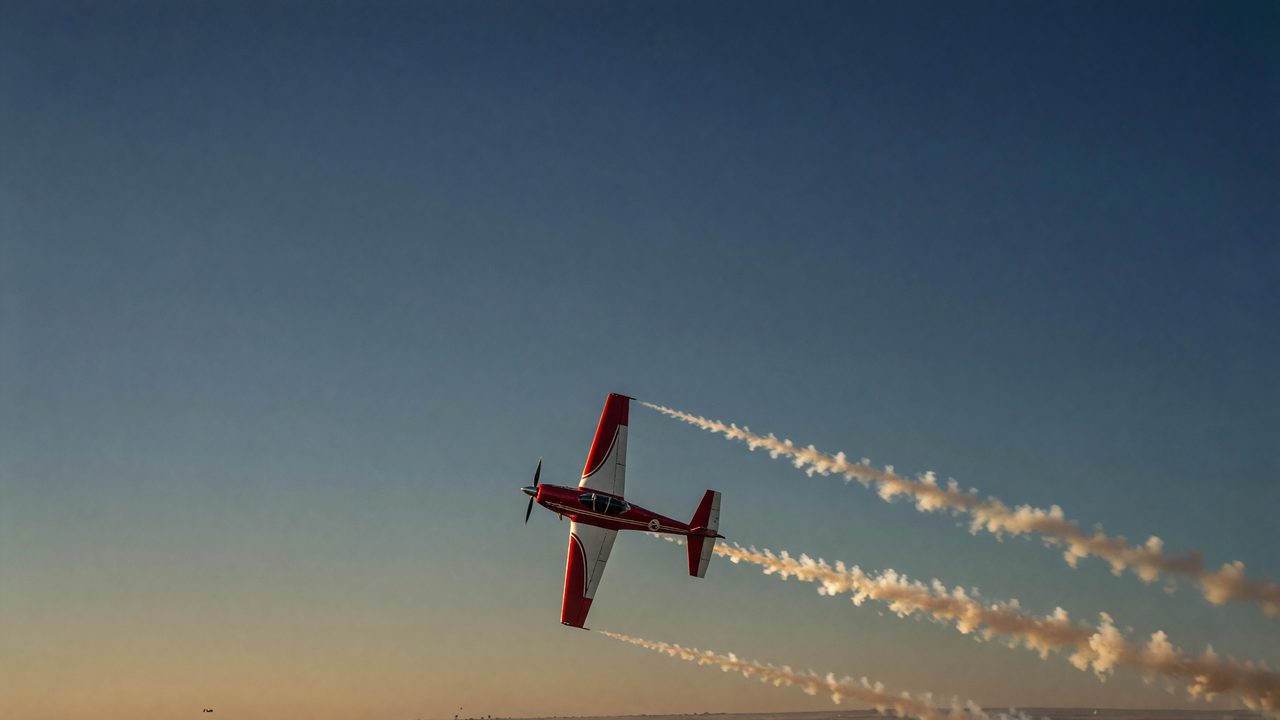
Three Times the Best: Patty Wagstaff and the Art of Flying Upside Down
How a bush-country passenger in Alaska became the first woman to win America's national aerobatic title — three years running — and turned championship precision into a lesson every pilot can use.
Alaska, 1979
Patty Wagstaff did not arrive in aviation through a tidy flight-school syllabus. She had moved to Alaska to work in the bush, and in 1979 she took her first lesson in a Cessna 185 floatplane on a water runway. The Ninety-Nines, in its profile "Patty Wagstaff: Fire and Air," records that moment as the point where air and engine finally matched the restlessness she had carried through years of travel and odd jobs. She earned her private certificate the following year.
Before she ever held the controls as pilot in command, she rode as a passenger on a chartered flight that never got airborne. The airplane ran out of runway on muddy Alaska strips, slid off the embankment, and came to rest inverted. No one was hurt, but Wagstaff crawled out convinced she could fly the machine better herself. That decision — born from a failed takeoff rather than a romantic barnstorming dream — set the trajectory for everything that followed.
From the Box to the National Team
Wagstaff began aerobatic training in 1983 and entered Unlimited competition within two years. By 1985, scarcely five years after earning her certificate, she had made the U.S. Aerobatic Team. The International Aerobatic Club, in its "Wagstaff Hall of Fame" tribute, describes her as a six-time team member who would later earn gold, silver, and bronze medals in world competition. She was not a novelty act in a male-dominated sport. She was a competitor measured against the same figures, the same judges, and the same penalties as every other Unlimited pilot in the box.
In September 1991, she became the first woman to win the U.S. National Aerobatic Championship in the combined men's and women's contest — a title that had never been segregated by gender on paper, but had never been held by a woman in practice. She defended it in 1992 and again in 1993. Three consecutive national championships placed her in a class occupied by only a handful of American pilots in any era.
The Extra 260 and the Smithsonian
Her championship airplane was the Extra 260, a one-of-a-kind prototype from German designer Walter Extra that Wagstaff purchased in 1990. The National Air and Space Museum, in "Aerobatic Pilot Patty Wagstaff Turned Her World Upside Down," notes that the aircraft went on permanent display in 1994, hung inverted from the museum ceiling the way Wagstaff so often flew it. Museum records place the airplane among the Lindberghs and beneath Amelia Earhart's Vega — company no aerobatic pilot takes lightly.
The inverted mount is not theater. Competition aerobatics demands that pilots see the horizon through clear floor panels and a protective seat frame while rolling, snapping, and carving figures with margins measured in tens of feet. Wagstaff's 260 embodied a systems-level approach to flight: energy in, energy out, attitude controlled before altitude could offer forgiveness.
Beyond the Trophy Case
Wagstaff's career did not end when the national titles did. She trained with the Russian aerobatic team, flew airshow routines before millions of spectators, and from 1999 to 2006 served as demonstration pilot for Raytheon's T-6 Texan II, performing at international venues including Paris and Farnborough. In 2004 she was inducted into the National Aviation Hall of Fame — the highest civilian honor in American aviation. Today she runs Patty Wagstaff Aviation Safety in St. Augustine, Florida, teaching aerobatics and upset prevention and recovery to pilots who may never roll an Extra but who share the same sky she has worked since Alaska.
Why it matters to you
Wagstaff's competition routines were flown below 2,000 feet AGL — the altitude band where most general-aviation pilots spend most of their lives. That choice was not recklessness. It was discipline. At low altitude there is no room to recover from sloppy energy management or vague spatial awareness; airspeed, angle of attack, and coordinated control inputs must be correct now, not after a leisurely climb. Modern upset-recovery and energy-management training asks the same question Wagstaff answered over three national championships: not how high you are, but whether you know exactly where the airplane is going next. Altitude is comfort. Precision is the margin.