The Man Who Hunted at Treetop Height
"Three DSOs, two MCs, and a VC earned by refusing to look away"
The Man Who Hunted at Treetop Height
Edward “Mick” Mannock turned fear into doctrine, victories into lessons, and low-level aggression into the warning that finally claimed him.
A life that refused the ground
Edward Corringham Mannock was born on 24 May 1887 to an English father and an Irish mother, a child of empire who spent his earliest years in India before a difficult return to England shaped a temperament both restless and watchful. By the summer of 1914 he was a telephone engineer in Turkey when the Great War began. Ottoman authorities interned him; the Ottomans repatriated him in April 1915 as medically unfit; he later recovered and joined the British Army. That verdict might have ended the story. Instead Mannock recovered, enlisted in the Royal Engineers, and transferred to the Royal Flying Corps, reaching the Western Front in 1917 with No. 40 Squadron RFC.
His first confirmed victory came on 7 May 1917. What followed was not the careless bravado of a lucky amateur but the ascent of a systematic hunter. Imperial War Museums records trace his steady rise through squadron assignments and decorations. By February 1918, with sixteen victories to his name, he was appointed a flight commander in the newly formed No. 74 Squadron. Between 12 April and 17 June 1918 alone he claimed thirty-six more successes, often destroying multiple German aircraft on a single patrol. On 21 May 1918 he scored four victories—one Hannover C in the morning and three Pfalz D.IIIs within about five minutes that evening—a burst of violence so concentrated it reads less like chance than choreography.
Doctrine, not daring
Squadron comrade Ira Jones, in King of Air Fighters, remembered Mannock as a man who converted the chaos of dogfighting into teachable procedure. He preached altitude advantage, sun position, mutual cover, and the discipline of the briefed plan. He was relentless in pursuit but fiercely protective of the pilots under his command, drilling them in the arts of observation and teamwork until hunting became habit. When he was promoted to command No. 85 Squadron in July 1918, he added nine more victories that month, pushing his official tally to sixty-one. The decorations that followed—Military Cross and Bar, Distinguished Service Order and Two Bars—reflected not a single heroic afternoon but sustained operational excellence across two brutal campaigning seasons.
The Victoria Cross, awarded posthumously and published in the Supplement to the London Gazette on 18 July 1919, came only after intensive lobbying by the men who had flown with him. The citation records actions across the spring and summer of 1918: repeated low attacks on enemy troops and transport, destruction of German aircraft when odds were steep, and leadership that placed him “wherever the fighting was heaviest.” Mannock did not merely score victories; he imposed a squadron culture in which every patrol had a purpose and every rookie had a guardian.
The warning and the wire
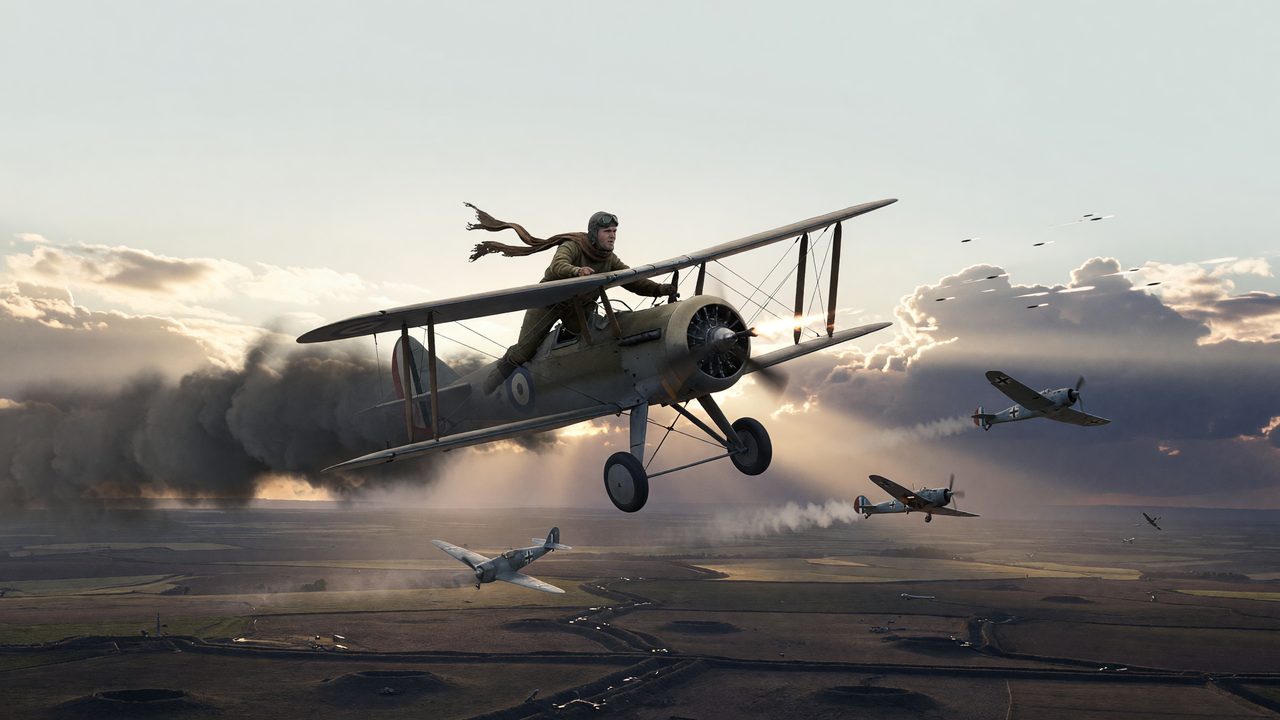
Norman Franks and Andy Saunders, in their scholarly biography Mannock: The Life and Death of Major Edward Mannock VC, DSO, MC, reconstruct his final days with the care the subject demands. At a farewell dinner on 20 July 1918, Mannock warned fellow ace George McElroy against the very habit that had brought both men success: pressing the fight too low, where rifle and machine-gun fire from the ground waits with patient malice. Three days later, on 26 July 1918, Mannock was killed while dogfighting near Calonne-sur-la-Lys, his SE5a brought down close to the treetops in country where the war still bled through every hedge and field. His body was never recovered. The loss stunned No. 85 Squadron and the wider RFC: the King of Air Fighters, the instructor who feared nothing in the air, had fallen to the oldest danger of all—flying within reach of the earth.
Why it matters to you
Mannock’s death forces every pilot—student or rated—to confront a distinction we train for but rarely phrase plainly: knowing a hazard and respecting it in the moment are different skills. He had identified the risk of low-level pursuit, lectured a peer about it, then died inside that same envelope three days later. Was it a lapse of attention after months of front-line fatigue, or the occupational cost of a commander who led from the front and closed to decisive range because that was where his men needed to see him fight? Modern training still circles the same tension: energy management and terrain clearance, sterile cockpit discipline, the temptation to “finish the maneuver” when victory—or pride—sits just below the horizon. Mannock’s sixty-one victories and his posthumous Victoria Cross prove that courage and method can carry you far. His end near Calonne proves something harder: the sky forgives many errors, but the ground does not, and the best brief in the world fails the day you stop flying as if someone you care about is watching from the formation on your wing.