The Lone Hunter: Billy Bishop and the Art of the Solo Kill
"The blue-nosed devil who raided an aerodrome before breakfast"
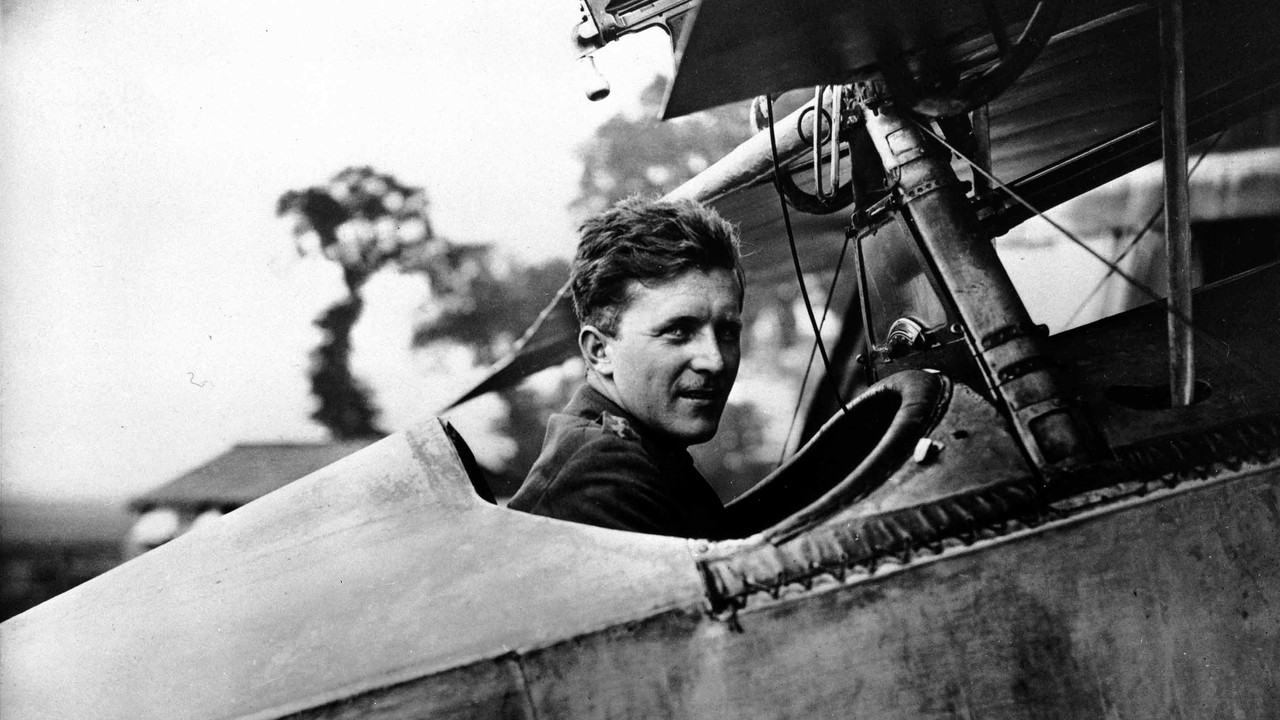
The Lone Hunter: Billy Bishop and the Art of the Solo Kill
William Avery Bishop did not wait for formation cover or squadron orders. He hunted alone—and in doing so rewrote what a single pilot could accomplish over the Western Front.
From Cavalry to Cockpit
Billy Bishop was born in Owen Sound, Ontario, on 8 February 1894. His path to the sky was anything but direct. A lacklustre stint at the Royal Military College gave way to cavalry service, then a transfer into the Royal Flying Corps. When he reached France in March 1917 with No. 60 Squadron, the air war over the Western Front had hardened into a lethal routine of patrols, duels, and sudden death.
Bishop arrived as a natural predator in a machine built for aggression. Flying a Nieuport 17 distinguished by a blue-painted spinner, he combined sharp marksmanship with an instinct for closing to decisive range. In April 1917 he claimed about a dozen victories and received the Military Cross for his participation in the Vimy Ridge fighting; the cited MC action was balloon destruction plus one machine driven down. By the end of May his tally stood at twenty-two victories—a pace that placed him among the most dangerous men in the sky.
Dawn Over Cambrai
The action that defined Bishop’s legend came on the morning of 2 June 1917. Alone, he crossed the lines and descended on a German aerodrome near Cambrai. Official records state that he attacked seven aircraft on the ground and claimed three destroyed before four enemy scouts rose to intercept him. He fought his way clear and returned to Allied territory. For this solitary raid he received the Victoria Cross—the first awarded to a Canadian airman.
The citation describes a pilot who assessed risk with cold precision, committed fully once the decision was made, and executed under fire without support. Whether one reads it as audacity or recklessness, the operational lesson is unmistakable: Bishop treated the enemy’s rear areas as hunting ground, not forbidden space.
The S.E.5a and the Final Sprint
After a spell in England and a posting to Washington, Bishop returned to France in June 1918 to command No. 85 Squadron, now flying the S.E.5a. The aircraft suited his style—stable gun platform, strong climb, enough speed to dictate the engagement. In twelve days he added twenty-five victories, bringing his confirmed total to seventy-two and making him the British Empire’s highest-scoring surviving ace of the war.
His final day of combat, 19 June 1918, encapsulated the man. In twelve minutes he shot down five German aircraft—a burst of concentration and gunnery that speaks to rehearsed technique as much as raw courage. He survived the war when many of his contemporaries did not.
Legacy and the Record
Bishop’s postwar life extended his influence far beyond the cockpit. He helped forge the British Commonwealth Air Training Plan during the Second World War, shaping how thousands of Allied aircrew would learn to fly. He died in Florida on 11 September 1956.
Controversy has since surrounded some of his claims. Brereton Greenhous’s critical biography, The Making of Billy Bishop, examines squadron records, logbooks, and the gaps between official tallies and independent corroboration. Historians continue to debate individual victories. What remains beyond dispute, in Canadian government records and official citations, is that Bishop was a superb marksman and an instinctive hunter of extraordinary courage—qualities that made him lethal in an era when aerial combat was still being invented.
Why it matters to you
Bishop’s Victoria Cross citation for the dawn raid of 2 June 1917 has been disputed because no independent witness confirmed the destruction of all seven aircraft on the ground. That tension—between an official medal narrative and incomplete archival evidence—is not merely historical curiosity. It mirrors decisions you face in training and operations: when logbook entries, ATC readbacks, or incident reports are the only record of what happened, how do you weigh official documentation against missing corroboration? Historians assessing Bishop must read primary sources critically, note what cannot be verified, and separate documented fact from plausible inference. The same discipline applies when you debrief a solo flight, review your own logbook, or evaluate an NTSB narrative against available data. Rigorous pilots and rigorous historians share one habit: they treat the official story as a starting point, not the final word.