The Last Three Miles: What Colgan 3407 Teaches About Monitoring, Ice, and the Stall
"February 12, 2009"
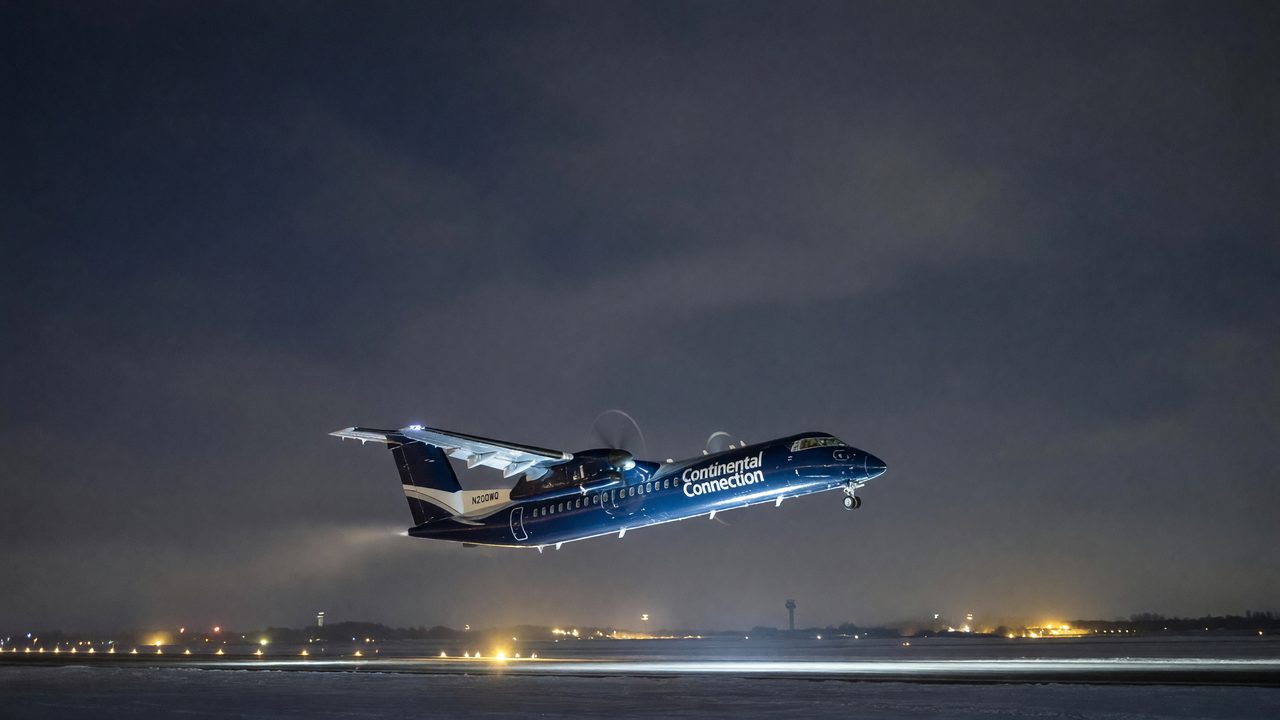
The Last Three Miles: What Colgan 3407 Teaches About Monitoring, Ice, and the Stall
On a routine February night approach to Buffalo, a Continental Connection turboprop lost 50 lives—not in a thunderstorm, but in the quiet failure of airspeed discipline and crew focus.
A Connection Flight on Final
On the night of February 12, 2009, Colgan Air Flight 3407—marketed to passengers as Continental Connection—was nearing the end of a Part 121 hop from Newark to Buffalo-Niagara International Airport. The aircraft was a Bombardier DHC-8-400, registration N200WQ, crewed by a captain and first officer with two flight attendants and 45 passengers aboard. Night visual meteorological conditions prevailed as the crew flew an instrument landing system approach to Runway 23.
About 2217 eastern standard time, roughly five nautical miles northeast of the airport, the turboprop descended into a house in Clarence Center, New York. All 49 people on board were killed, along with one resident on the ground. The airplane was destroyed by impact forces and a postcrash fire. What the National Transportation Safety Board would document in Docket DCA09MA027 was not a hidden mechanical flaw, but a loss of control on approach that unfolded in seconds—and built across the final miles.
Ice, Speed, and a Cockpit That Drifted
The Q400 was certified for icing, and the crew had activated deicing systems during the flight. As they descended through the approach, both pilots noted ice on the windshields; the first officer remarked there was “lots of ice.” Flight data recorder information later showed an “ice detected” message on the engine display as the crew configured for landing. The reference-speeds switch, which advances stall warning margins when ice accretes on the airframe, was found in the increase position after the accident—a setting that, per the airplane’s flight manual, required higher approach speeds than the crew had briefed.
Below 10,000 feet, sterile-cockpit rules under 14 CFR 121.542 required nonessential conversation to stop. Cockpit voice recorder transcripts in the NTSB’s CVR Group Chairman’s Factual Report tell a different story. The captain and first officer discussed career plans, winter flying experience, and ice exposure—talk unrelated to flying duties while they configured flaps, extended landing gear, and slowed for the outer marker. The captain yawned repeatedly. The first officer, fighting ear discomfort, had told the captain before departure that she might have stayed home if she felt this ill there.
Meanwhile, the autopilot held altitude as airspeed bled away. After power was reduced near the outer marker, indicated airspeed fell through the 140s and 130s. On the primary flight display, the low-speed cue—a red-and-black bar along the airspeed tape—climbed toward the airplane’s actual speed, a visual warning that the margin above stall was shrinking. Neither pilot arrested the decay in time.
The Stick Shaker and the Wrong Instinct
At 2216:27, with flaps moving toward 10 degrees and airspeed near 131 knots, the stick shaker fired. The device vibrated both control columns, delivering the tactile and aural warning for which every turbine pilot trains: you are about to stall. The autopilot disconnected.
Flight data from the NTSB’s Flight Data Recorder Group Chairman’s Factual Report show what happened next. Four-tenths of a second after the shaker began, both control columns moved aft—pitch increased when the wing needed angle of attack reduced. Engine power came up, but the airplane rolled sharply left, then right past wings level. The stick pusher, designed to drive the nose down after a stall, activated; the first officer retracted the flaps. Airspeed fell toward 100 knots. The stick pusher cycled again as bank angles exceeded 100 degrees. Less than half a minute after the first shaker activation, the Q400 was in a steep, unrecoverable descent. The cockpit voice recorder captured the captain’s grim acknowledgment just before impact.
What the Board Concluded
In its 2010 accident report, the NTSB determined that the probable cause was the captain’s inappropriate response to stick shaker activation, which led to an aerodynamic stall from which the airplane did not recover. Contributing factors were the flight crew’s failure to monitor airspeed against the rising low-speed cue; failure to adhere to sterile-cockpit procedures; the captain’s failure to effectively manage the flight; and Colgan Air’s inadequate procedures for airspeed selection and management during approaches in icing conditions.
The investigation reached beyond stick-and-rudder mechanics into fatigue, remedial training, stall-recovery instruction, and FAA oversight. But at the center remained a familiar aviation pattern: a crew that lost track of a basic parameter—airspeed—while attention wandered, then reacted to a stall warning with the very input that deepens the stall.
Why it matters to you
The chain of events that brought Colgan 3407 down is studied in classrooms and simulators today because the same pattern still appears in modern accident reports: erosion of airspeed on approach, monitoring breakdown below 10,000 feet, and a startle response that pulls back when the wing is already at the edge. Whether you fly a Cessna 172 on a practice ILS or a turboprop into a Northeast winter, the lesson is identical. The low-speed cue is not decoration; the stick shaker is not a suggestion. Sterile cockpit is not bureaucracy—it is bandwidth reserved for the approach. And in icing, reference speeds and performance data are not paperwork; they define how much airspeed you must carry before the shaker ever speaks. Train those habits on every approach, in every aircraft, until the correct response—reduce angle of attack, add coordinated power, hold configuration until you are flying again—is muscle memory, not debate.