The Halibag: Britain's Overlooked Heavyweight
"Britain's unsung workhorse"
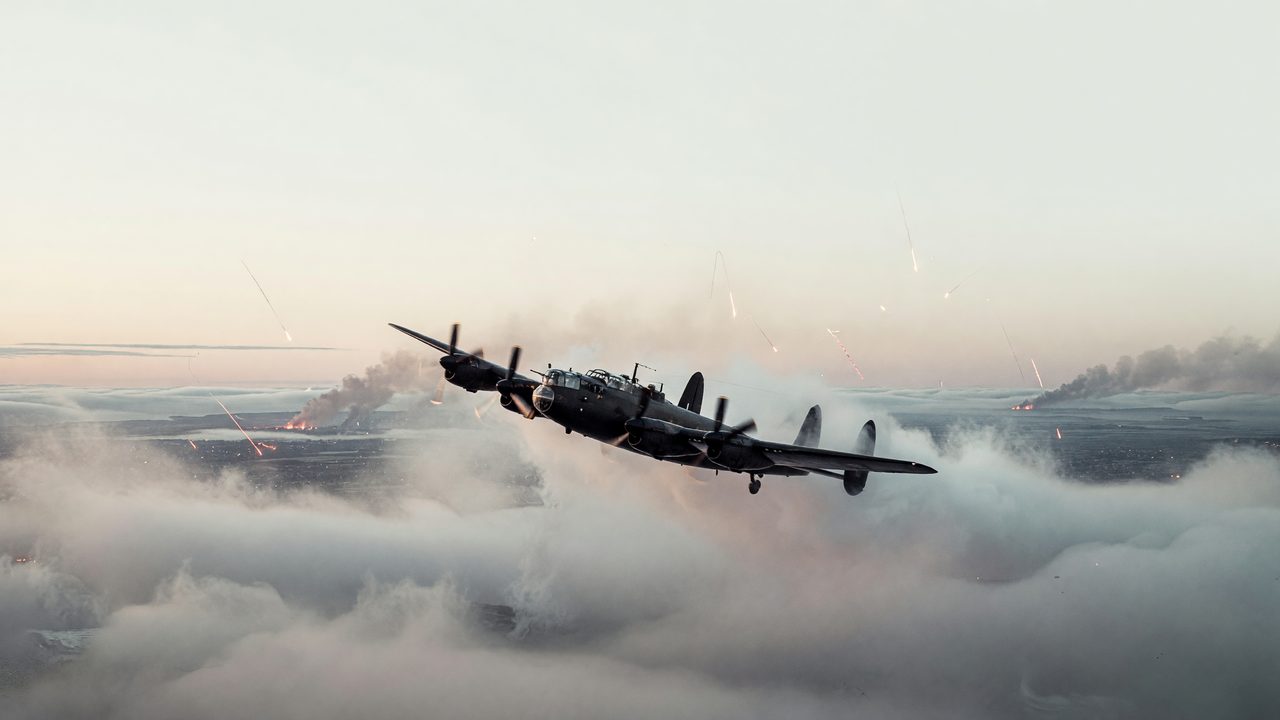
The Halibag: Britain's Overlooked Heavyweight
The Handley Page Halifax carried a quarter of Bomber Command's bombs over Germany, yet history remembers its stablemate. For the crews who flew it, that was never the whole story.
When the Handley Page Halifax lifted off on its maiden flight on 25 October 1939, Britain's night-bombing force was still taking shape. The aircraft that emerged from Handley Page's design office became the second four-engined British heavy bomber to reach squadron service in the Second World War, and it would reach the enemy months before its more celebrated partner in the Main Force. Avro's Lancaster would later dominate the headlines and the hangar debates, but in the spring of 1941 the Halifax was the machine opening the strategic bombing campaign over occupied Europe.
Into the Fight
Operational life began in earnest on 10 March 1941, when Halifaxes attacked the docks at Le Havre. The sortie carried a grim footnote: on the return leg over England, one bomber was shot down by a Royal Air Force night fighter, a reminder that the war's hazards did not end at the coast. Days later, on the night of 12–13 March, a Halifax participated in the raid on Hamburg—the first British four-engined bomber to strike Germany itself, according to RAF Museum records. The Halifax had beaten the Lancaster into combat, and for the next four years it would shoulder a share of the night offensive that few aircraft could match.
Between 1941 and 1945, Halifaxes flew more than 80,000 sorties and delivered in excess of 227,000 tons of bombs on Germany, accounting for more than a quarter of all Royal Air Force tonnage dropped on the Reich. Over 6,100 were built. Those numbers sit alongside a blunt assessment from Air Chief Marshal Arthur Harris, who regarded the Halifax as inferior to the Lancaster for the Main Force role. Crews and ground crews often told a different story, praising the airframe's robust construction and its willingness to absorb punishment and bring men home.
Merlin Years
Early marks were powered by Rolls-Royce Merlin engines, beginning at roughly 1,130 horsepower and climbing through successive variants to as much as 1,480 horsepower by August 1943 production. The Merlin Halifax was a workhorse, but it was also a compromise. Testing at RAF Boscombe Down identified insufficient rudder control on early aircraft; the deficiency was not fully addressed until the Mk II Series 1A entered production in August 1943, when the characteristic D-shaped rudders and revised nose glazing finally arrived. Turret changes, airscrew upgrades from wooden to metal, and a steady diet of small modifications kept squadrons flying, yet the Merlin-powered bomber remained limited by modest climb performance and a service ceiling of about 22,800 feet—margins that mattered when flak, fighters, and weather stacked the odds against a seven-man crew.
Losses mounted on deep penetrations into Germany, and from September 1943 Bomber Command restricted Halifax bomber operations to less hazardous targets. The type was never a failure; it was an airframe waiting for the right engines.
Hercules at Last
That wait ended with the Mk III, which entered service in December 1943 after production began the previous September. Bristol Hercules air-cooled radials, rated at 1,675 horsepower in IBCC archival accounts, transformed the aircraft crews had long hoped for. The Mk III climbed fast, operated at a ceiling of 24,000 feet, and could reach ~282 mph—performance that finally let the Halifax hold its own in the bomber stream. Losses declined; more crews completed their tours. The Mk VI, regarded by many as the pinnacle of the line, pushed the Hercules 100 to 1,800 horsepower with fuel injection in place of standard carburetion, yielding an initial rate of climb of 1,650 feet per minute and a maximum speed that Warbirds Resource Group specifications place among the fastest of its generation.
The "Halibag," as crews nicknamed it, outgrew the pure bomber role. It towed Horsa and Hamilcar gliders, dropped agents, served Coastal Command, and supported special operations across the Mediterranean and beyond. When the last operational sortie by a Coastal Command Halifax flew from Gibraltar in March 1952, the type had served Bomber Command, transport squadrons, and maritime patrol for more than a decade.
Why it matters to you
The Halifax's transition from liquid-cooled Merlins to air-cooled Hercules radials is a case study in how propulsion choices reshape mission effectiveness—not just on a datasheet, but in survivability. The Merlin marks offered adequate speed and familiar maintenance for an aircraft designed around inline engines, yet their modest climb and lower operational ceiling compressed the crew's options: heavier fuel and bomb loads eroded performance margins precisely where German defences were densest. The Mk III and Mk VI did not merely add horsepower; they changed the entire envelope. Higher ceiling meant cruising above more flak belts. Stronger climb meant reaching that altitude before the formation drifted vulnerable over hostile territory. Greater speed shortened time over target. For a modern pilot training on performance planning, weight-and-balance, and density altitude, the lesson is direct: the same airframe with a different engine installation is a different aircraft in the operational sense. Powerplant selection drives payload-range trade-offs, climb gradient, and the single-engine-inoperative scenario long before you ever turn onto final. The Halifax crews who celebrated the Hercules marks understood that instinctively. Every performance brief you file today rests on the same arithmetic they lived by over the North Sea.