The Albatros D.V: Germany’s Peak Fighter That Peaked Too Soon
"An elegant fuselage wrapped around a wing that wanted to leave"
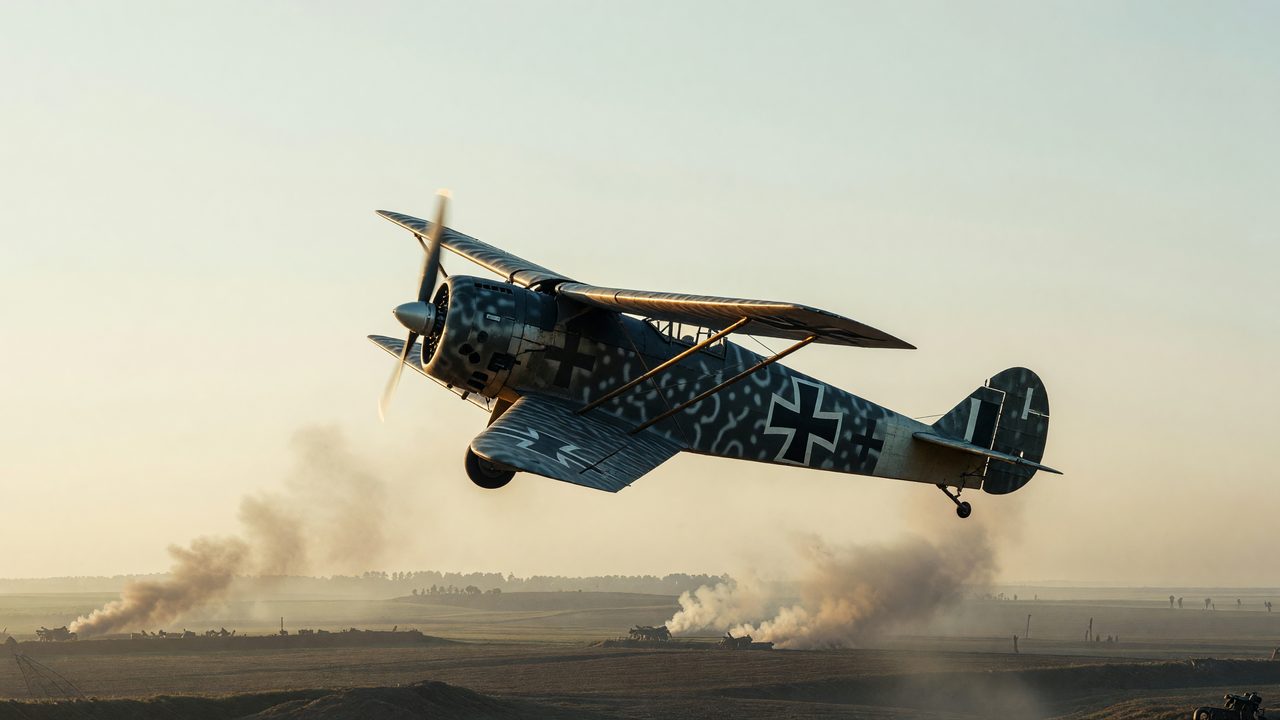
The Albatros D.V: Germany’s Peak Fighter That Peaked Too Soon
In the spring of 1917, Albatros delivered what looked like the next great German fighter. Within weeks, pilots were dying—and the Red Baron was writing angry letters.
A Lighter Skin, Same Bones
When the Inspectorate of Flying Troops ordered an improved successor to the Albatros D.III in April 1917, the requirement seemed straightforward: keep what worked, fix what did not. Chief designer Robert Thelen kept the proven 170-horsepower Mercedes D.IIIa engine and the sesquiplane wing arrangement— a narrow lower wing paired with a broad upper surface—that had made the D.III a Western Front terror through the winter of 1916–17.
What Thelen changed was the fuselage. The D.V introduced a sleek, elliptical cross-section that shed roughly 32 kilograms compared with its predecessor. The prototype flew late that April; by May, the type was in squadron service. On paper, it was the natural heir to Germany’s most successful fighter line. In the cockpit, the story unraveled almost immediately.
Promise Without Performance
Pilots who had wrestled the D.III into victories found the D.V offered almost no meaningful performance gain. The lighter fuselage did not translate into the decisive edge the front demanded—not when Allied designs were advancing on their own timetable. Worse, the lower wing proved structurally even more vulnerable than before.
Fatal crashes attributed to wing failure appeared within the first month of operations. The Inspectorate of Flying Troops, Idflieg, ordered belated stress tests only after men had already died. The conclusions were blunt: the sesquiplane layout, stressed in high-speed dives and violent maneuvering, was dangerously weak. A fighter that could not survive the fight had no business leading one.
Manfred von Richthofen, Germany’s most famous ace, put the frustration into words in a July 1917 letter. The D.V was, he wrote, “so obsolete and so ridiculously inferior to the English that one can’t do anything with this aircraft.” Coming from a pilot who understood both tactics and equipment, the verdict was damning.
The D.Va: Strength Added, Problem Unsolved
Albatros responded with the D.Va. Stronger wing spars, heavier ribs, and a reinforced fuselage addressed the failures that had killed pilots and embarrassed the manufacturer. The modifications were serious engineering—but they added weight without curing the fundamental weakness of the layout. The D.Va was tougher, not truly better.
Meanwhile, alternatives faltered on their own terms. The Fokker Dr.I, with its celebrated triplane configuration, was grounded after suffering wing failures of its own. The Pfalz D.III proved mediocre in combat. Industrial reality and squadron needs left the Luftstreitkräfte little choice. Production continued: approximately 900 D.Vs and 1,612 D.Vas before the line ceased in April 1918, figures documented in standard German aircraft references and operational compilations.
Mainstay by Default
From the Western Front to Palestine, D.V and D.Va aircraft served through the Armistice. They were Germany’s most numerous fighter in late 1917—and among its most frustrating. When the Fokker D.VII finally reached front-line units in mid-1918, it offered what the Albatros line could not: a modern fighter worthy of the pilots flying it. Until then, Jagdstaffeln made do with an aircraft whose flaws were known, documented, and, for too long, tolerated.
Comparative studies of the period’s Western Front duels underscore the mismatch: British SE.5a formations increasingly held the technical and tactical advantage while German pilots trusted airframes that Idflieg’s own tests had already condemned. Museum technical monographs on the D.Va preserve the engineering record of those wing-failure investigations—evidence that the problem was understood long before it was fully solved.
Why it matters to you
Richthofen’s letter asks a question every rated pilot recognizes in a different uniform: why does an organization keep flying—and building—equipment everyone knows is inadequate? The answer is rarely mystery. It is logistics, production capacity, training pipelines, and the absence of a ready replacement. When the Dr.I was grounded and the Pfalz disappointed, the D.Va was not the best fighter available; it was the fighter available in volume, on every front, with mechanics trained to maintain it and factories tooled to produce it. Modern operational decisions follow the same pressure: certification timelines, fleet commonality, contract obligations, and the cost of grounding an entire type while something better matures. The skill is not nostalgia for 1917; it is systems thinking. When you evaluate an aircraft—or advocate for a change—ask not only whether the machine is obsolete, but what institutional inertia, supply chain, and risk calculus keep it in the air anyway. That is how pilots turn history into judgment.