Ten Thousand Feet and Silence
"000 feet"
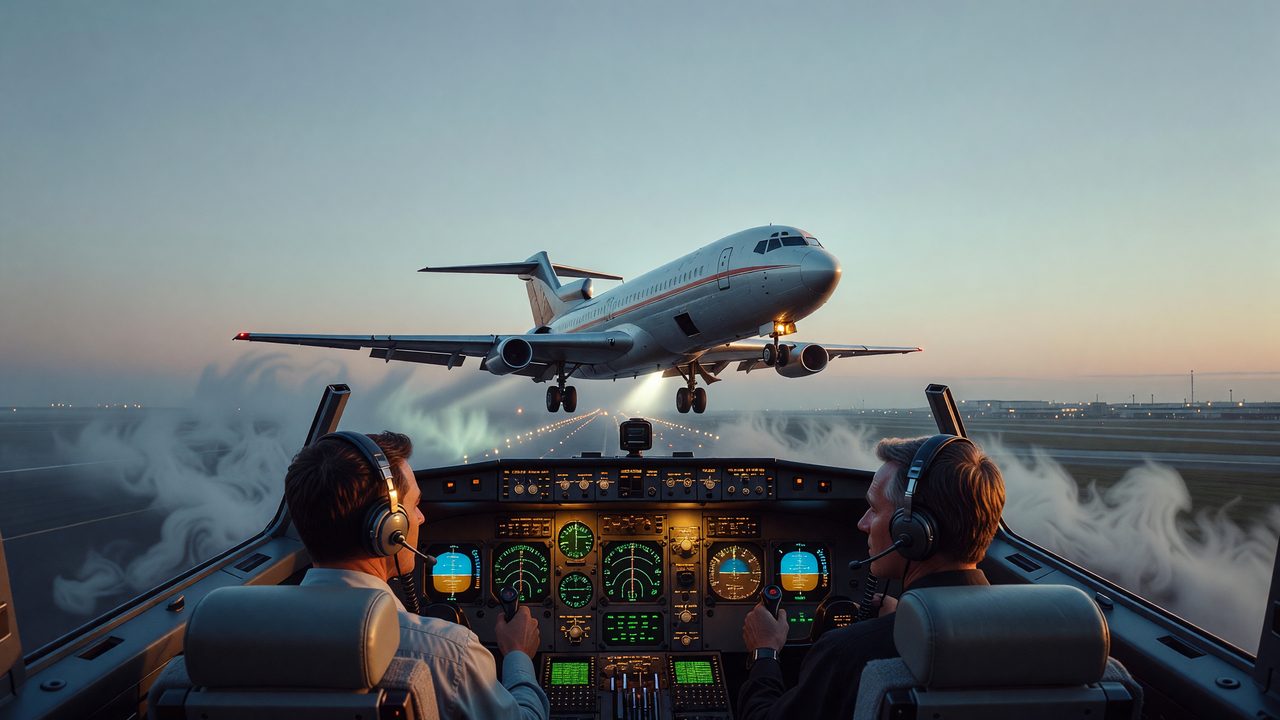
Ten Thousand Feet and Silence
When cockpit conversation turns from camaraderie to catastrophe, federal regulators draw a hard line around the moments that matter most.
Distraction at the Worst Possible Time
Long before pilots coined the phrase “sterile cockpit,” accident investigators already recognized a grim pattern. Flight crews absorbed in tasks unrelated to flying missed configuration items, lost altitude awareness on approach, and failed to hear clearances. Flaps left unset before takeoff. Gear not extended before landing. Altitude not monitored on an instrument approach. Engine anti-ice neglected during a snowstorm departure. Each error shared a common thread: attention diverted from the aircraft at a moment when margins were thin.
The problem was not malice. It was human nature in a high-workload environment. A captain pointing out stadium lights while snow obscured the runway. A first officer distracted by jump-seat conversation during descent. A pilot making a passenger announcement while vectored in busy airspace. These were not hypothetical scenarios—they were the kinds of events that preceded serious incidents and, in some cases, fatal accidents.
A Rule With a Date
On January 19, 1981, the Federal Aviation Administration responded with a regulation pilots would soon call by a simpler name. Published in the Federal Register as “Flight Crewmember Duties” under Docket 20661 (46 FR 5502), the rule was codified in 14 CFR § 121.542 for scheduled air carriers and mirrored in § 135.100 for commuter and on-demand operators. The language was direct: certificate holders may not require, and flight crewmembers may not perform, any duties during critical phases of flight except those required for safe operation.
The regulation also placed responsibility squarely on the pilot in command. No crewmember may engage in—and no captain may permit—any activity during a critical phase that could distract anyone from their duties or interfere with their proper conduct. The FAA listed examples with unusual specificity: ordering galley supplies, confirming passenger connections, promotional passenger announcements, sightseeing commentary, filling out payroll paperwork, eating meals, nonessential cockpit chatter, nonessential cabin-to-cockpit communications, and reading material unrelated to the flight. If it does not serve safe operation, it waits.
Where the Line Falls
Section 121.542 defines “critical phases of flight” with equal precision. The sterile period covers all ground operations involving taxi, takeoff, and landing—taxi being movement under the aircraft’s own power on an airport surface—and all flight operations below 10,000 feet mean sea level, except cruise flight. That exception matters: a turboprop cruising at 8,000 feet MSL on a short segment is not in cruise as the rule defines it. The sterile cockpit applies throughout.
The 10,000-foot threshold became aviation shorthand, but altitude alone does not tell the whole story. High-elevation airports can place an aircraft in terminal airspace while still well above 10,000 feet MSL. ASRS reporters have noted that sterile-cockpit discipline may need to begin earlier—by distance from destination or by altitude above ground level—when field elevation compresses the arrival phase. The regulation sets the legal floor; professional judgment often demands more.
What the Reports Revealed
A decade after the rule took effect, NASA’s Aviation Safety Reporting System examined whether sterile-cockpit violations persisted. In ASRS DirectLine Issue 4, analyst Robert L. Sumwalt reviewed 63 reports coded for relevance to the regulation. The findings were sobering. Nearly half involved altitude deviations. Course deviations, runway transgressions, and clearance errors appeared repeatedly. Extraneous conversation between cockpit crewmembers ranked as the most frequently cited violation—often acknowledged afterward with statements like “if we had adhered to the sterile cockpit, this situation probably would not have occurred.”
Flight attendant visits to the cockpit, non-pertinent company radio calls, passenger announcements below 10,000 feet, and sightseeing each appeared as contributing factors. Sumwalt’s conclusion was blunt: despite a clear rule on the books, crews continued to have accidents and serious incidents that disciplined cockpit focus might have prevented. Disobedience was rarely intentional. It simply happened—until it did not.
The Recorder as Witness
Accountability for cockpit discipline does not rest on memory alone. Under 14 CFR § 121.359, approved cockpit voice recorders on covered aircraft must operate continuously from the start of the preflight checklist through completion of the final checklist at flight termination. That recording window spans precisely the ground and low-altitude phases the sterile cockpit rule protects. Investigators reviewing CVR audio after an incident can hear whether crews maintained focus or drifted into the casual conversation the regulation forbids. The rule defines expected behavior; the recorder preserves what actually occurred.
Why it matters to you
Whether you fly a regional jet, a piston single, or a simulator session preparing for your instrument rating, the sterile cockpit rule encodes a skill every competent pilot must internalize: workload management through disciplined attention. The chain of events that led the FAA to act on January 19, 1981—distraction during taxi, takeoff, approach, and landing—still appears in modern accident reports. NTSB narratives continue to cite crew conversation, extraneous tasks, and divided attention during critical phases. The regulation may apply directly only to Part 121 and 135 crews, but the principle is universal. Below 10,000 feet, on final, on the runway: fly the airplane first. Everything else can wait. That is not bureaucracy. It is the habit that keeps small distractions from becoming large consequences.