Heinemann's Hot Rod: How the A-4 Rewrote the Rules of Naval Attack
"Tinker Toy,"
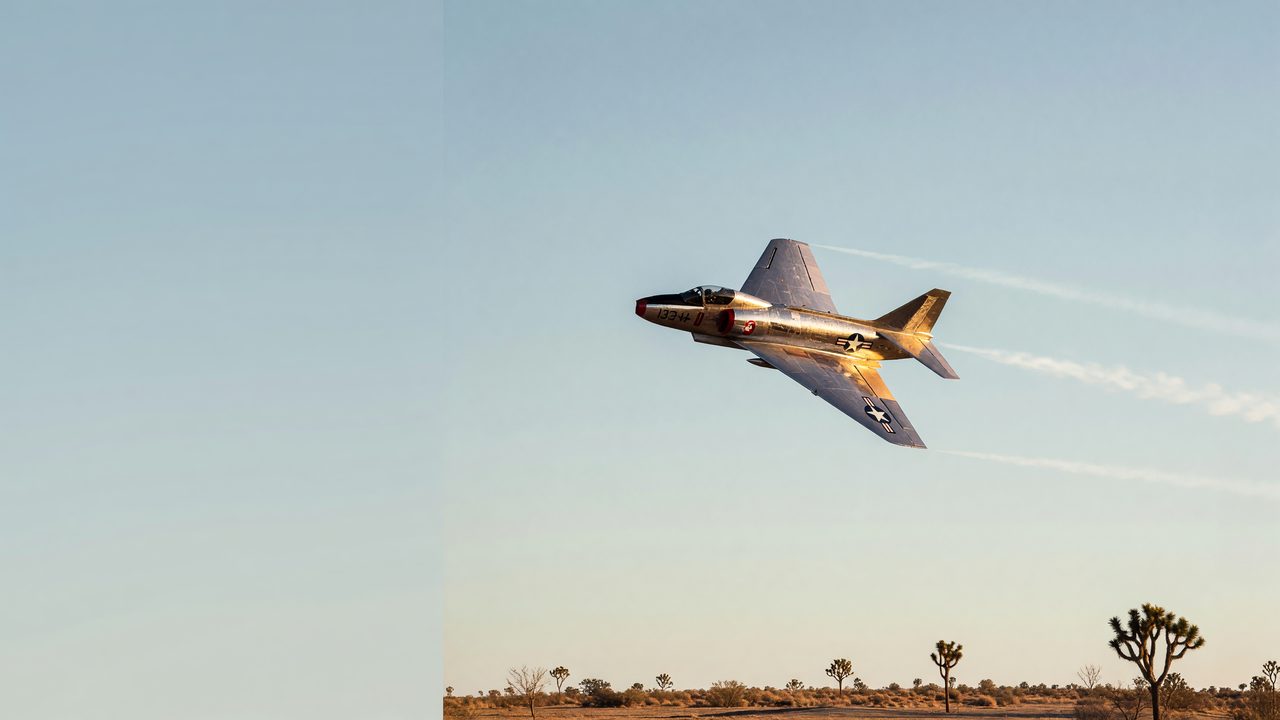
Heinemann's Hot Rod: How the A-4 Rewrote the Rules of Naval Attack
Douglas engineer Ed Heinemann bet the Navy that a jet half the size they imagined could carry a nuclear weapon—and built one of the most enduring carrier aircraft in history.
In 1952, the U.S. Navy faced a defining question: what aircraft would replace the piston-powered AD Skyraider as the fleet's primary attack platform—and carry a nuclear weapon if called upon? The service's notional thinking pointed toward ever-larger, ever-heavier jets, a trend that alarmed Douglas Aircraft chief engineer Ed Heinemann. He had watched weight spiral on other programs and understood what carrier aviation could not afford: an airplane that outgrew the ship.
Heinemann's team proposed something radical. Their design targeted a maximum takeoff weight of 14,250 pounds—barely half the Navy's conceptual ceiling. On June 12, 1952, the Navy signed the contract. What emerged was not a scaled-down compromise but a purpose-built machine shaped by discipline rather than excess.
Small Enough to Skip the Fold
The XA4D-1, Bureau Number 137812, lifted off for the first time on June 22, 1954. The "Skyhawk" was so compact that its 27-foot wingspan eliminated the need for folding wings—a first for a carrier jet since the SBD Dauntless of World War II. That single design choice saved weight, complexity, and maintenance hours on crowded flight decks.
The delta wing was not merely a styling decision. Integral fuel tanks were built into the wing structure itself, distributing weight efficiently and freeing internal volume for systems and ordnance. The landing gear was engineered with a pilot's worst day in mind: designed to drop by gravity if hydraulic pressure failed, so a wounded airplane could still reach the deck. Every detail reflected Heinemann's philosophy that reliability and simplicity were force multipliers.
Pilots noticed immediately. They called it the "Scooter," the "Tinker Toy," and—most affectionately—"Heinemann's Hot Rod."
Speed, Records, and Fleet Service
In 1955, an A4D-2 demonstrated that small did not mean slow. It set a world speed record of 695.163 mph over a 500-kilometer closed course, a number that silenced skeptics who equated compact airframes with limited performance. The Skyhawk entered fleet service in September 1956 and became the Navy's primary light attack aircraft for the next three decades—a tenure measured not in headlines but in daily launches from catapults and arrested landings that defined naval aviation routine.
Nearly 3,000 Skyhawks rolled off Douglas production lines. They served far beyond American carriers: Argentina, Australia, Israel, Kuwait, New Zealand, and Singapore all operated the type. The A-4 became one of the most widely exported American combat jets of its era, proof that a well-conceived design could outlive the strategic assumptions that created it.
Vietnam and the Scooter's Trial
In Southeast Asia, the Skyhawk faced its crucible. It was the most numerous attack type on U.S. carrier decks over Vietnam, flying the unglamorous work of close air support, armed reconnaissance, and strike missions against a determined adversary and unforgiving terrain. The airplane's small size made it a harder target; its agility and responsiveness earned respect from aircrews who measured aircraft worth in survivability and ordnance on target.
Two names forever linked to the A-4 illustrate both its prominence and its peril. Vice Admiral James Stockdale flew the Skyhawk and was shot down in one. Senator John McCain flew it too—and was shot down in one. Their stories are not footnotes to the type's history; they are reminders that the Scooter carried Americans into combat at the moment when the nation's naval air war was most intense.
The Lesson in the Airframe
The A-4 proved a proposition that still governs aircraft design: a combat airplane does not need to be large to be lethal. It needs to be right. Heinemann did not win by building the biggest jet on the ramp. He won by aligning weight, structure, fuel, and mission requirements so tightly that the resulting airplane could do more with less—day after day, carrier after carrier, decade after decade.
Design records preserved through the Naval History Museum's scholarship, the National Naval Aviation Museum's historical record, production histories maintained by the Skyhawk Association, and Douglas documentation tracing BuNo 137812's flight history all tell the same story: disciplined engineering produced an aircraft whose influence outlasted the Cold War mission that created it.
Why it matters to you
The engineering principles pioneered in the Skyhawk are still embedded in the aircraft you fly today. Every time you brief a weight-and-balance sheet, you are practicing the same discipline Heinemann enforced: structure carries fuel, gear must work when systems fail, and performance is a function of what you choose not to carry. Modern trainers and light jets inherit that logic—low wing loading where it helps, integral tanks where they save weight, systems simplified so a single failure does not cascade. The Navy wanted a nuclear-capable attack aircraft to replace the Skyraider; what it got was a lesson in right-sizing that every pilot still applies when calculating fuel, passengers, and baggage against runway length and density altitude. Lethality, Heinemann showed, is not a matter of size. It is a matter of getting the numbers right.