Built for Speed: The SPAD S.XIII and the End of the Air War
"Two Vickers, a Hispano-Suiza V-8, and the grip to survive any dive"
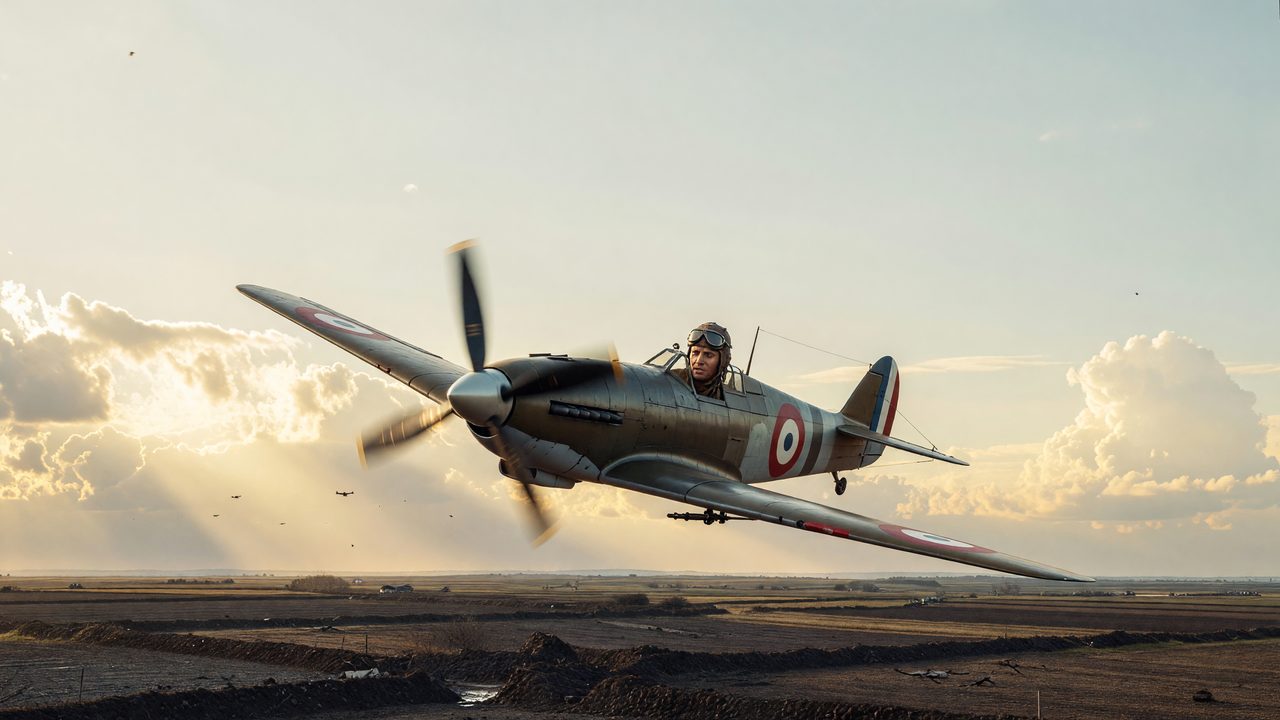
Built for Speed: The SPAD S.XIII and the End of the Air War
France’s answer to a fading champion became the most numerous Allied fighter of 1918 — fast, heavy, and unforgiving in the circuit, but exactly what the Western Front demanded.
By the spring of 1917, the air war over France had hardened into a contest of horsepower, structure, and firepower. Georges Guynemer, France’s most celebrated ace, told SPAD designer Louis Béchereau plainly that the 150-horsepower S.VII — once a respectable match for German scouts — could no longer hold its own against newer enemy types. Béchereau’s reply was not a refinement but a new aircraft altogether: the S.XIII, a larger and stronger single-seat fighter built around the geared 200-horsepower Hispano-Suiza 8B V-8. The prototype flew on 4 April 1917. Production machines reached the front the following month, and within weeks the type was defining how Allied pilots fought.
The S.XIII was engineered for the realities of 1918 combat rather than the gentle turning fights of earlier years. At 1,000 metres it could reach roughly 211 km/h, a figure that placed it ahead of much of the German inventory in straight-line speed. Its structure was notably robust in a dive — a quality pilots valued when pursuit meant driving downhill after a fleeing opponent or recovering from a botched attack. Armament matched the escalation on the ground: two forward-firing Vickers machine guns, each fed with 400 rounds. That pairing gave sustained, concentrated firepower at the moment when a single pass often decided the engagement.
The aircraft demanded respect on the ground as well. Its left-handed propeller and high wing loading made landings a serious exercise in judgment and timing. Contemporary accounts and squadron reports consistently describe the SPAD as a machine that rewarded competence and punished carelessness. It was not a trainer’s aeroplane in the sentimental sense. Yet pilots who mastered it gained something decisive in the air: the ability to choose when to fight and when to leave.
Scale tells the story of its acceptance. By the Armistice, 8,472 S.XIIIs had been built, with orders for another 10,000 cancelled as the war ended. Nearly every French fighter squadron operated the type in its final campaigns. Among the Allies, the United States Army Air Service made it their primary fighter after the Nieuport 28 revealed structural weaknesses that no front-line commander could ignore. Fifteen of the sixteen American fighter squadrons in France were equipped with the SPAD — a statistic that speaks to confidence in the airframe when lives were the currency of procurement.
The victory tallies of the type’s most famous pilots remain part of aviation history. Guynemer, René Fonck, Frank Luke, and Eddie Rickenbacker all scored heavily in the S.XIII. In a detail that links man and machine with particular poignancy, Guynemer scored his first SPAD S.XIII victory — his fifty-third overall — on 20 August 1917, though the type’s first credited combat successes predated that — a milestone on a career spent at the leading edge of French fighter development. Fonck, methodical where Guynemer was romantic, used the SPAD’s speed and twin guns to build one of the war’s highest ace records. American pilots Luke and Rickenbacker, flying the same basic airframe over very different sectors, demonstrated that the type’s virtues translated across tactics and temperament.
Against its contemporaries, the S.XIII occupied a clear niche. It was faster than both the Sopwith Camel and the Fokker D.VII, yet less manoeuvrable in a tight, low-speed turning fight. That trade was not a flaw in the design; it was the design. Béchereau and his pilots had accepted reduced agility in exchange for speed, structural strength, and heavier armament — the combination that matched how the war in the air was actually being fought by 1918.
Why it matters to you
Modern training still turns on the same question American squadron leaders faced when they traded the Nieuport 28 for the SPAD: what wins in the environment you actually fly? The Nieuport was lighter and more agile, but its structural troubles made it a liability in the dives and hard manoeuvres combat required. The SPAD asked more of a pilot on final — high wing loading does not forgive a sloppy approach any more today than it did at Issoudun — yet it offered speed to intercept, firepower to finish, and strength to recover. That is energy management and mission fit, not nostalgia. When you brief a flight, you are still weighing whether the aeroplane that feels best in the pattern is the one that best serves the sortie. The S.XIII was not a gentle machine. For the pilots who learned it properly, it was a war-winner — fast, tough, and relentless.