Alone at 170 Miles: Valentina Tereshkova and Vostok 6
"She called herself Chaika. The world called her history."
Alone at 170 Miles: Valentina Tereshkova and Vostok 6
On June 16, 1963, a textile worker with 126 parachute jumps became the first woman to orbit Earth — flying solo in a largely automated capsule she might still have to land herself.
The woman Korolev needed
Valentina Tereshkova was not a professional pilot. She was a 26-year-old textile-factory worker from Yaroslavl who had trained as an amateur parachutist and logged 126 jumps before the Soviet Union selected her for cosmonaut training in 1962. That parachute experience mattered to Sergei Korolev’s engineers in a way every Vostok pilot understood: the spacecraft’s spherical descent module was not designed to touch down with a human inside. At roughly seven kilometers above the Kazakh steppe, the cosmonaut ejected from the capsule and descended under a personal parachute — the same method Yuri Gagarin had used two years earlier.
Tereshkova’s selection for the Vostok program was itself a product of Cold War competition. Soviet planners, watching American discussions about female astronauts, prepared a dual mission: Vostok 5 would push endurance limits with Valery Bykovsky aboard, while Vostok 6 would carry the first woman into orbit. Bykovsky launched from Baikonur on June 14, 1963, his call sign Yastreb — Falcon. Two days later, Tereshkova followed from the same pad.
Chaika lifts off
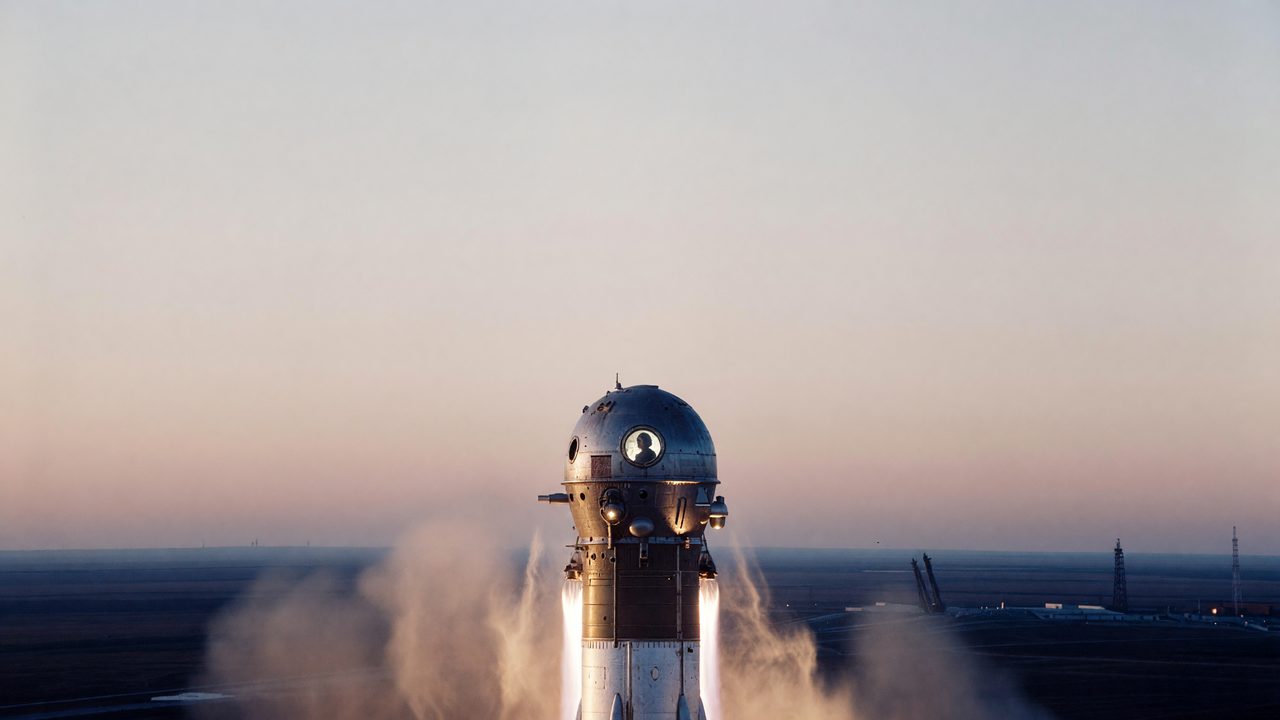
Vostok 6 rose at 12:29:52 Moscow time on June 16. Tereshkova’s call sign was Chaika — Seagull — and within half an hour of launch she had established radio contact with Bykovsky still circling above in Vostok 5. Soviet television broadcast images from her cabin while the world absorbed the fact that a woman was alone in orbit for the first time in history.
The Vostok was largely automated, but automation was not the whole story. Tereshkova had to manually orient the capsule during orbit and stand ready to execute a manual reentry if the automatic attitude-control system failed. Mission planners had originally scheduled a one-day flight. After her early performance proved solid enough to satisfy the State Commission, controllers extended the mission to three days — 48 orbits at altitudes between roughly 181 and 231 kilometers, approximately 112 to 144 miles above the Earth.
Learning to fly the ship in orbit
What the public celebration masked, primary sources now make plain, was hard work performed under genuine uncertainty. According to mission timelines compiled by Anatoly Zak at RussianSpaceWeb.com, Tereshkova attempted manual spacecraft orientation during her second orbit and failed; the vehicle kept drifting along its bank axis. Decades later, her handwritten flight journal — published with commentary and analyzed by historian Asif A. Siddiqi in his transcript study of the Vostok-6 mission — confirmed that she received no simulator practice for this maneuver before launch. Her first attempt at a potentially life-critical attitude-control exercise came during the real flight.
Radio transcripts Siddiqi recovered from Soviet archives capture the tension. On her 38th orbit, after Yuri Gagarin relayed instructions from the ground, Tereshkova told Korolev directly: “Don’t worry, I’ll do everything.” She eventually held the spacecraft in braking attitude for 25 minutes during the 45th orbit — long enough to satisfy controllers that manual reentry remained possible. The automated deorbit sequence on June 19 fired as planned on the 49th orbit. Tereshkova ejected, opened her parachute, and landed northeast of Karaganda with only minor facial injuries from the helmet striking the ground after touchdown.
Propaganda and a person alone
Tereshkova’s flight was engineered spectacle and political theater — a dual-ship operation timed for maximum global impact. It was also, as Siddiqi’s transcript work emphasizes, the experience of one human being managing nausea, fatigue, equipment quirks, and the disorienting novelty of weightlessness while controllers debated whether her answers about her health were evasive.
Soviet officials prohibited open radio discussion of medical problems or technical failures. Instead, every Vostok cosmonaut carried a coded vocabulary drawn from botany. When Smithsonian Air & Space Magazine examined Tereshkova’s released journal in 2013, the complete list became public for the first time: pal’ma (palm) signaled that the cosmonaut felt unwell; ryabina (rowan) indicated vomiting; vyaz (elm) meant a braking-engine malfunction; olkha (alder) reported attitude-control failure. Tereshkova never transmitted those words. Her mission ended successfully without them. But the codebook sat in her logbook beside star-drawing exercises controllers used to assess cognitive function — reminders that early spaceflight was as much improvised human factors engineering as rocket science.
Why it matters to you
Tereshkova’s botanical codebook is an ancestor of the standardized emergency communication every rated pilot trains today. When something goes wrong aloft, vague description wastes seconds; agreed terminology — whether “pan-pan,” “mayday,” a squawk code, or a terse format readback — lets a controller or crewmate act without decoding emotion or euphemism. Tereshkova was forbidden to say plainly that she felt sick or that her spacecraft would not hold attitude. She was expected to say ryabina or olkha instead. Modern emergency checklists, challenge-and-response flows, and ICAO phraseology solve the same problem for a different cockpit: compress complex failure into language both sides already understand. The first woman to orbit Earth never had to speak in trees. The lesson she carried in her journal — that clear, pre-briefed words under stress can mean the difference between help arriving and help guessing — is one every pilot still rehearses before the real flight begins.