When the Door Stayed Shut
"150 people boarded a routine flight. One pilot had already decided they would never land."
When the Door Stayed Shut
On a routine spring morning over the French Alps, a reinforced cockpit door—designed to keep intruders out—became the instrument of a deliberate crash that killed 150 people and rewrote airline security policy worldwide.
A Normal Climb, Then Silence
Germanwings Flight 9525, an Airbus A320-211 registered D-AIPX, departed Barcelona-El Prat on the morning of March 24, 2015, bound for Düsseldorf. The low-cost carrier’s red-and-white livery was familiar on European routes; the flight carried 144 passengers and six crew. After a routine climb, the aircraft levelled at 38,000 feet and tracked northeast over the Maritime Alps, where ridgelines fold into steep valleys still holding winter snow.
Shortly after reaching cruise altitude, the captain left the flight deck to use the lavatory—standard practice on a two-pilot flight. He expected to return within minutes. He never did.
The Descent No One Could Stop
First Officer Andreas Lubitz, 27, remained alone on the flight deck. He did not respond to air traffic control. On the cockpit voice recorder, investigators later heard the captain knocking, then pounding, on the reinforced door. Lubitz’s breathing was steady. The selected altitude decreased. The autopilot commanded a controlled descent.
The A320’s cockpit door, strengthened after the September 11 attacks, could be locked from inside so that no one outside could force entry during a hijacking. That same mechanism now sealed the captain out. Controllers watched the radar target descend through flight levels with no explanation. The French Air Force scrambled a Mirage fighter to intercept, but the aircraft was already committed to its trajectory.
At 10:41 a.m. local time, Germanwings 9525 struck a mountainside near Prads-Haute-Bléone at roughly 430 knots. There were no survivors.
What the Investigation Found
France’s Bureau d’Enquêtes et d’Analyses (BEA) led the investigation. Its final report, published in March 2016, concluded that Lubitz had deliberately caused the crash. He had been treated for severe depression and suicidal ideation, but had concealed his condition from Germanwings and from aviation medical examiners. Physicians who knew his history were bound by medical confidentiality laws that, under the rules then in force, did not permit disclosure to his employer without the patient’s consent.
The BEA also documented that Lubitz had researched suicide methods and cockpit door security on internet-connected devices in the days before the flight. The tragedy was not a mechanical failure, a weather encounter, or a loss of control. It was a deliberate act by a credentialed pilot who understood exactly how the aircraft’s protections worked—and how to turn them against the people behind him.
The Industry Responds
The shock rippled through aviation faster than any technical airworthiness directive. Within weeks, the European Aviation Safety Agency convened a task force at the request of the European Commission. Its July 2015 report issued six recommendations focused chiefly on improving oversight of crew fitness and access to the flight deck. EASA subsequently issued Safety Information Bulletin 2016-09 on minimum cockpit occupancy, reinforcing what operators across Europe had already begun implementing: the so-called “two-person rule,” requiring that two authorized crew members remain on the flight deck whenever one pilot leaves.
Carriers outside Europe adopted similar policies. Debate over cockpit doors themselves—whether they should remain impregnable from outside—continued, but the immediate consensus was clear: a lone pilot behind a locked door represented an unacceptable risk. Separately, regulators and lawmakers began re-examining how aviation medicine handles mental health. The Germanwings case exposed a fault line between a pilot’s right to medical privacy and an airline’s duty to ensure that only fit aviators carry passengers. EASA would go on to propose strengthened medical requirements and new rules on mental fitness for air operations in the years that followed.
The Alps Remember
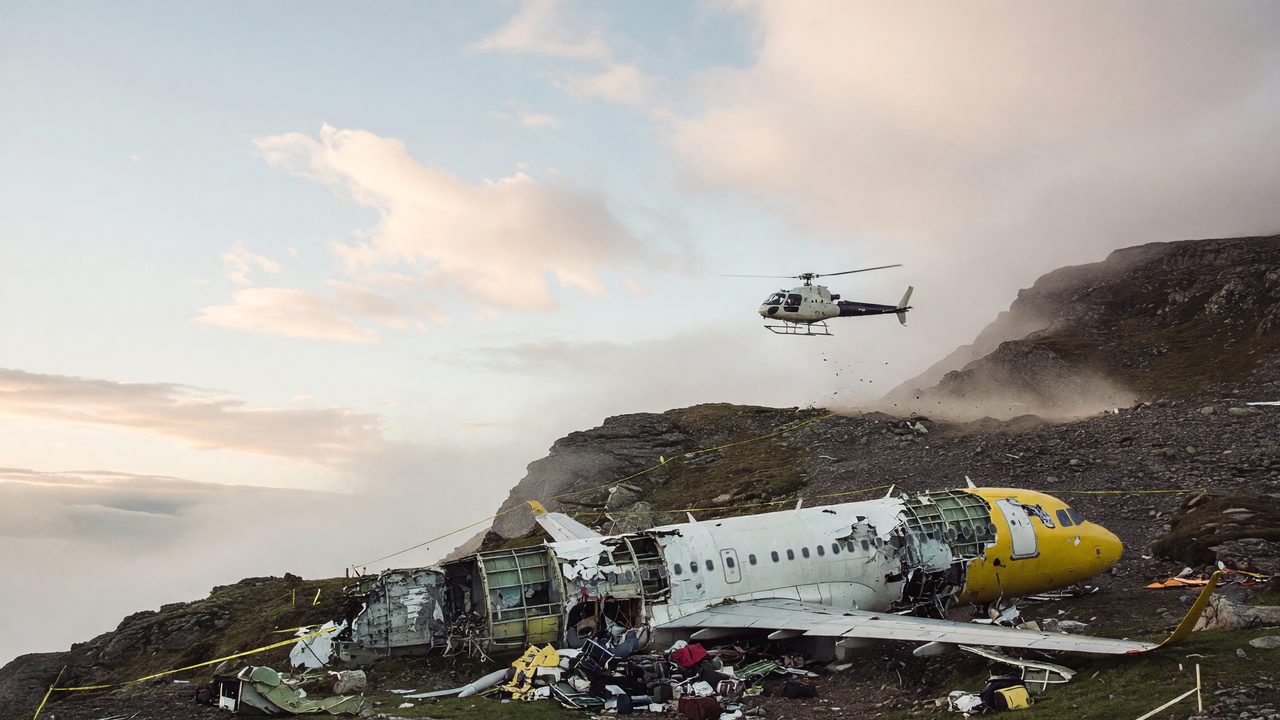
Search teams reached the debris field on slopes so steep that recovery workers were lowered on cables. Yellow tape marked scattered fragments of fuselage against grey rock and pine. Helicopters hovered in morning mist while investigators pieced together a timeline that made no sense until the cockpit recorder spoke. For the families of the 150 victims—from Germany, Spain, and more than a dozen other nations—the BEA’s findings brought anguish without comfort. The industry had built a door strong enough to resist a terrorist in the aisle. No one had planned for the threat sitting in the right seat.
Why it matters to you
Germanwings 9525 sits in every modern CRM briefing whether your syllabus names it or not. You train the two-person cockpit rule, you learn why a colleague must stay on the flight deck when you step out, and you hear why some operators require a flight attendant inside the door as well. That protocol exists because one locked door turned a security feature into a weapon. The harder lesson is medical fitness. Lubitz’s doctors knew pieces of his history that his airline did not, and privacy law kept those facts from reaching anyone who could have grounded him. Today’s aero-medical system still wrestles with that balance: pilots must be able to seek treatment without career-ending stigma, yet carriers and regulators must protect the travelling public. When you complete your medical, report your medications honestly, and support a culture where crew can speak up about fitness without fear, you are practicing the legacy of a crash that proved trust behind the door runs both ways—through the lock, and through the honesty of the person who holds the keys.