Nine Days on a Single Tank
"Nine days. One tank. No stops."
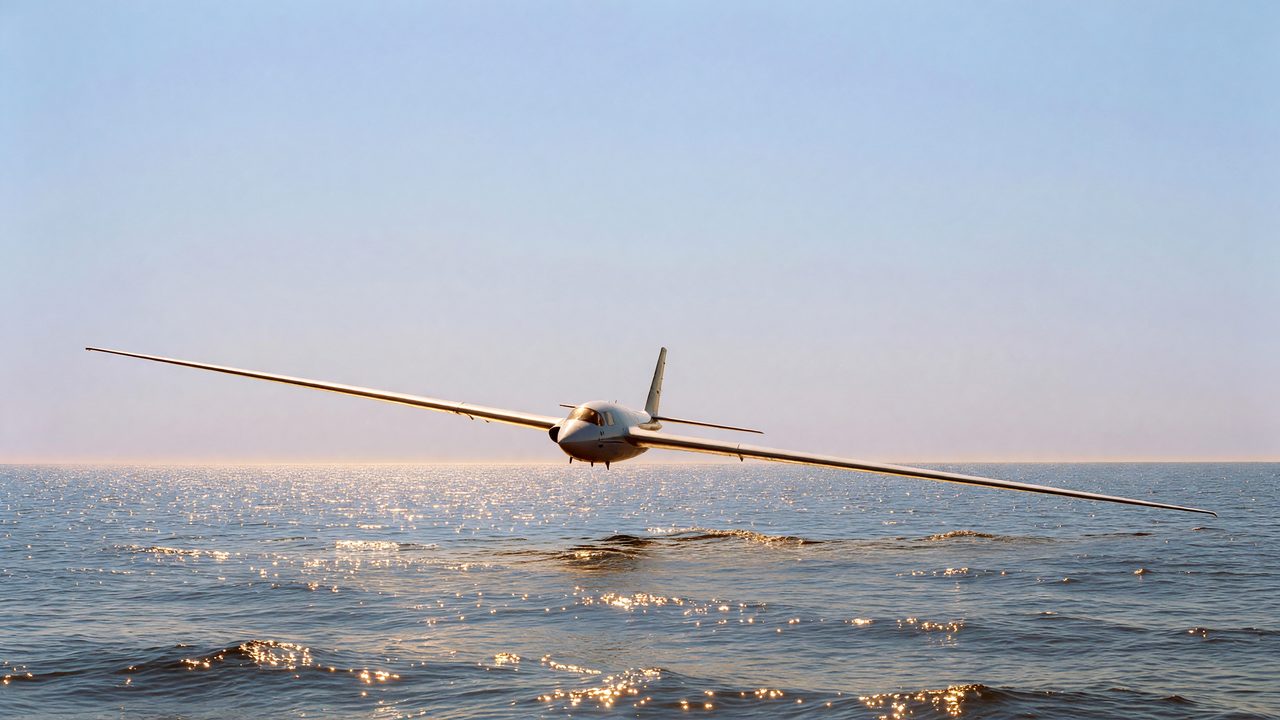
Nine Days on a Single Tank
In December 1986, two pilots climbed into a carbon-fiber dragonfly and bet everything on fuel math, weather luck, and nerves of steel.
The Rutan Voyager looked like nothing else on the ramp at Edwards Air Force Base — a twin-boom canard with a wingspan of 110 feet and a fuselage barely wide enough for two people to sit side by side. Dick Rutan, a decorated Air Force fighter and test pilot, and Jeana Yeager, an accomplished record-setter in Rutan-designed aircraft, would share a cockpit the Smithsonian National Air and Space Museum later measured at roughly five and a half feet long and under two feet wide. Behind them lay six years of design work by Dick's brother Burt, the iconoclastic founder of the Rutan Aircraft Factory, who reportedly sketched the concept on a napkin before turning it into engineering reality. What emerged from roughly six years of construction at Mojave (the brothers had predicted eighteen months) was not an airplane so much as a flying fuel tank: 98 percent graphite-honeycomb composite structure weighing just 939 pounds, wrapped around 17 separate fuel cells holding 7,011 pounds of avgas — more than three times the airframe's empty weight and 72 percent of the aircraft's gross takeoff mass.
On the morning of December 14, 1986, Voyager lifted off at 8:01:44 a.m. Pacific time and immediately proved that the numbers were tighter than anyone wanted to admit. The takeoff roll lasted over two minutes; with fuel-laden wings flexing downward, the wingtips dragged along Edwards' 15,000-foot runway and tore the winglets apart. The aircraft got airborne, but the damaged appendages had to go. Rutan and Yeager deliberately flew the airplane in a slip, building side loads until the broken winglets broke free — one falling into a yard five miles from the base, the other vanishing entirely. It was an inauspicious start to a journey that would cover 24,986 official miles without a single refueling stop.
What followed was nine days of improvisation against geography and weather. Over the Pacific on the second day, meteorologists routed Voyager along the margins of Typhoon Marge to harvest tailwinds that pushed ground speed to 150 mph. That was the easy part. Near Brazil, a violent nocturnal thunderstorm snapped the aircraft onto a 90-degree bank — a flight attitude Rutan had once feared, until Voyager demonstrated it could survive there. Over Africa, the crew climbed above 20,000 feet to escape convective weather, far above the 8,000-foot altitude that fuel economy demanded. The two pilots traded duties in the cramped cabin: one flying, navigating, communicating, and transferring fuel tank to tank to keep the fragile structure in balance; the other managing logistics and snatching fragments of rest that never quite materialized. They ate little. They lost weight. They kept going.
On the morning of December 23, with the California coast in sight and roughly 450 miles remaining, Voyager's rear Teledyne Continental engine starved and quit. A clogged fuel strainer and an air pocket in the line had done what the Pacific could not. The aircraft dropped 3,500 feet before Rutan restarted the front engine and, moments later, coaxed the rear powerplant back to life. They leveled at 3,500 feet and pressed on with what the National Air and Space Museum records as 106 pounds of fuel aboard — about 1.5 percent of what they had carried at departure. At 8:05:28 a.m., nine days, three minutes, and forty-four seconds after takeoff, Voyager touched down at Edwards before a crowd of about 55,000 spectators, completing the first nonstop, non-refueled circumnavigation of the globe. Rutan, Yeager, Burt Rutan, and crew chief Bruce Evans would receive the Collier Trophy for the achievement. The airplane itself now hangs in the Smithsonian's collection, a monument to what happens when you refuse to land.
Why it matters to you
Voyager's gamble was not merely human endurance; it was a materials revolution. In 1986, building an entire airframe from carbon-fiber and honeycomb sandwich panels was experimental — the kind of thing homebuilders and visionaries attempted while certificated manufacturers stuck with aluminum. Today, that same structural philosophy is what you sit inside when you fly a Cirrus SR20 or SR22, or climb into an Epic E1000GX. Composite construction delivers high strength at low weight, which translates directly into performance, range, and fuel efficiency — the same variables Rutan and Yeager managed by hand over the Atlantic and Pacific. Modern training emphasizes fuel planning, systems knowledge, and decision-making under fatigue; Voyager simply took those skills to their absolute limit. The airplane was a prayer answered by engineering. The lesson for every pilot is that the math still has to work — whether you are crossing a county line or an ocean.